

When you close your eyes and picture the beaches of Hawaiʻi, you can almost hear it: that long, weeping, beautifully fluid note that glides through the air like a warm ocean breeze.
That signature sound doesn't come from a standard guitar or an ʻukulele. It belongs to the Hawaiian steel guitar—an incredible homegrown invention that didn't just define the sound of the islands, but fundamentally transformed global music, giving birth to everything from country music's pedal steel to blues and rock slide guitar.
The Happy Accident Behind the Sound
The story goes back to the late 1880s with a young Hawaiian schoolboy named Joseph Kekuku on the island of Oʻahu.
As the story is told, Joseph was walking along a road holding an old Spanish guitar when he picked up a stray metal bolt (some accounts say a railway spike or a pocket knife) and slid it across the strings. Instead of the usual sharp, individual notes of a plucked guitar, the metal produced a smooth, continuous, sliding pitch.
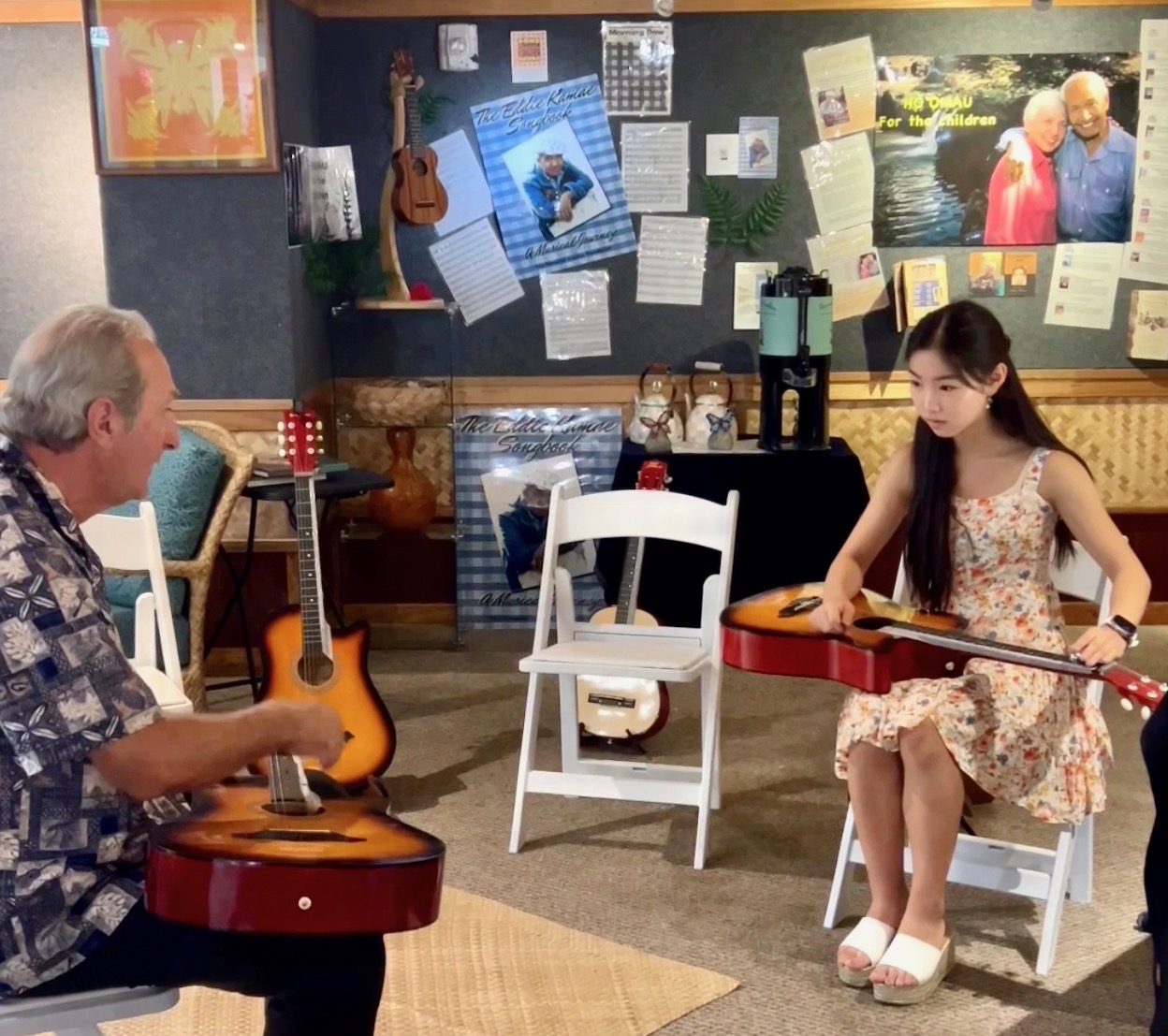
Fascinated, Kekuku took the idea and ran with it. He raised the strings of his guitar so they wouldn't buzz against the frets, laid the instrument flat across his lap, and used a solid steel bar to glide across the strings while wearing fingerpicks.
glissando: A continuous slide upward or downward between two musical pitches. This became the defining characteristic of Hawaiian steel guitar.
3 Things That Make It Unique
Unlike a standard acoustic guitar, the Hawaiian steel guitar is a completely different beast in how it’s set up and played:
A Global Phenomenon
By the early 1900s, Hawaiian musicians were touring the US mainland and captivating audiences. The 1915 Panama-Pacific International Exposition in San Francisco triggered a massive "Hawaiian Music Craze." Suddenly, Hawaiian music recordings were outselling almost every other genre in America.
As mainland musicians watched Hawaiian masters play, they began adopting the style.
The Steel Guitar Today
While the electric guitar eventually took over mainstream rock, the steel guitar remains the literal heartbeat of traditional Hawaiian music. From legendary masters like Sol Hoʻopiʻi and Gabby Pahinui to contemporary players keeping the tradition alive, the instrument represents a beautiful blend of Hawaiian innovation and global influence.
Next time you hear that gorgeous, sliding melody, you’ll know you’re listening to a piece of history born on a dusty road in Oʻahu over a century ago.


